
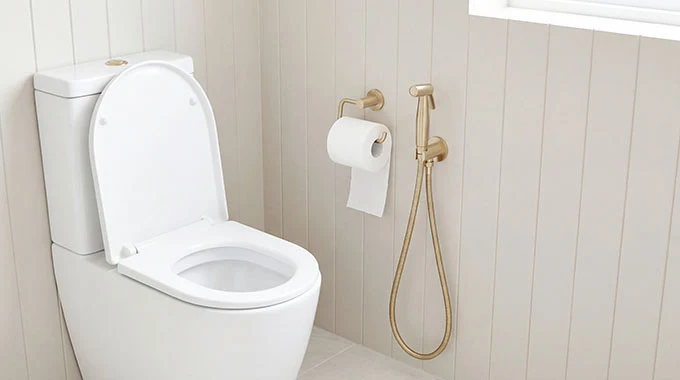
A bidet upgrade often begins with a product comparison. Homeowners look at controls, comfort features, and how the finished bathroom will feel. Those are reasonable considerations, but the existing toilet and its connections deserve attention before a product is ordered. The most attractive model is not necessarily the right match for the fixture or the available space.
Planning the installation as a small project can prevent avoidable surprises. That means identifying the type of product, checking its requirements, and understanding who will handle each part of the work. The plumbing assessment should come before assumptions about compatibility, especially when the toilet or nearby connections have not been reviewed for some time.
Be clear about the type of product
The word bidet can refer to different arrangements, and those arrangements do not all involve the same installation. Keep the exact model information available when requesting advice. Product specifications and instructions are more useful than a generic photograph from a shopping page. They allow the installer to discuss the actual requirements rather than a broad category.
Consider the space around the toilet and the way the bathroom is used. Controls should be practical for the people using them, and the installed product should leave adequate access for cleaning and maintenance. If accessibility is part of the reason for the upgrade, describe the particular needs rather than assuming that any product marketed for comfort will address them.
Review the toilet before adding anything
If the toilet already moves, leaks, or behaves unreliably, bring that issue into the conversation early. An accessory does not resolve an existing problem with the fixture. Ask whether any separate repair should be completed first. This helps keep the upgrade from becoming entangled with a concern that was present before the new product arrived.
A bidet installation service assessment can help establish whether the chosen product suits the existing arrangement. Explain what you have selected and what prompted the upgrade. Ask which details can be checked before the appointment and which require an on-site assessment. Clear product information can make that discussion more useful than a general request to “fit a bidet.”
Check the water connection requirements
The product instructions and the existing plumbing both matter. Ask the installer to assess the connections rather than assuming that every supplied fitting is suitable for every home. If the shut-off valve is stiff, leaking, or difficult to reach, mention that before the work begins. Do not force the valve or improvise a connection to make the product fit.
Where the valve needs attention, the toilet shut off valve replacement cost should be discussed as a separate part of the scope. Ask what work is proposed and whether it is required for the installation to proceed. A clear estimate distinguishes fitting the new product from repairing an existing component. That makes both the cost and the reason for the work easier to understand.
Account for any electrical requirements
Some products have electrical requirements, while others do not. Review the manufacturer’s instructions for the exact model. If electrical work is needed, arrange for an appropriately qualified professional and clarify who will coordinate it. A plumbing appointment should not be assumed to include electrical changes that have never been discussed.
Avoid planning around temporary extension cords or an improvised supply. The installation should be suitable for the product and the location. Ask questions before purchasing if the bathroom does not appear to meet the stated requirements. Solving that issue at the planning stage is preferable to discovering it when the new product is unpacked beside the toilet.
Decide who supplies and checks the parts
If you buy the product yourself, keep the receipt and all included components together. Ask whether the installer needs to review the model before the visit. Confirm what happens if an item is incompatible, incomplete, or damaged. These are ordinary project questions, and agreeing on them early can make a delayed installation less confusing if a problem arises.
If the provider supplies the product, ask for the model details and the reason it is being proposed. You should still understand the controls, maintenance needs, and support arrangements. A supplied product is not automatically the best fit for every preference. The useful choice is one whose requirements and everyday use have been discussed with the household.
Keep the installation visit focused
Clear the area around the toilet if it is safe to do so, and make sure the product instructions are available. Tell the installer about any change in the fixture’s condition since booking. If a new leak has appeared, it needs its own assessment rather than being treated as part of the planned upgrade by default.
For an urgent plumbing problem, emergency plumbing is a separate service reference. Confirm the appropriate response directly and explain the actual symptoms. Do not continue with an accessory installation simply because the appointment is already scheduled if an unresolved problem changes the situation. The existing plumbing needs to be suitable before the upgrade is treated as complete.
Learn the controls and keep the instructions
At handover, ask for a demonstration of normal operation and an explanation of the product’s care requirements. Keep the manual and installation record somewhere easy to find. If another household member will use the product, make sure they understand the controls too. A feature that seemed obvious during the demonstration may be less obvious later.
A well-planned bidet upgrade starts with the existing bathroom and ends with a product the household can use confidently. Checking compatibility, connections, and any additional work in advance gives the project a clear scope. It also helps ensure that the new feature improves the room without concealing an older problem that still needs attention.
