
When a research compound keeps returning to the spotlight, you stop calling it a trend and start calling it a standard. That is precisely what somatropin recombinant represents—a peptide so consistently reliable that laboratories worldwide give it encores. Unlike fleeting novelties that generate one promising paper and fade into obscurity, somatropin commands repeat attention because the data keeps validating its value. From metabolic investigations to cellular regeneration studies, this synthetic human growth hormone analog refuses to be a one-act show. Researchers who work with it once tend to come back, not out of habit, but because the compound keeps answering questions they did not even know they had.
Why the Standing Ovation Keeps Growing
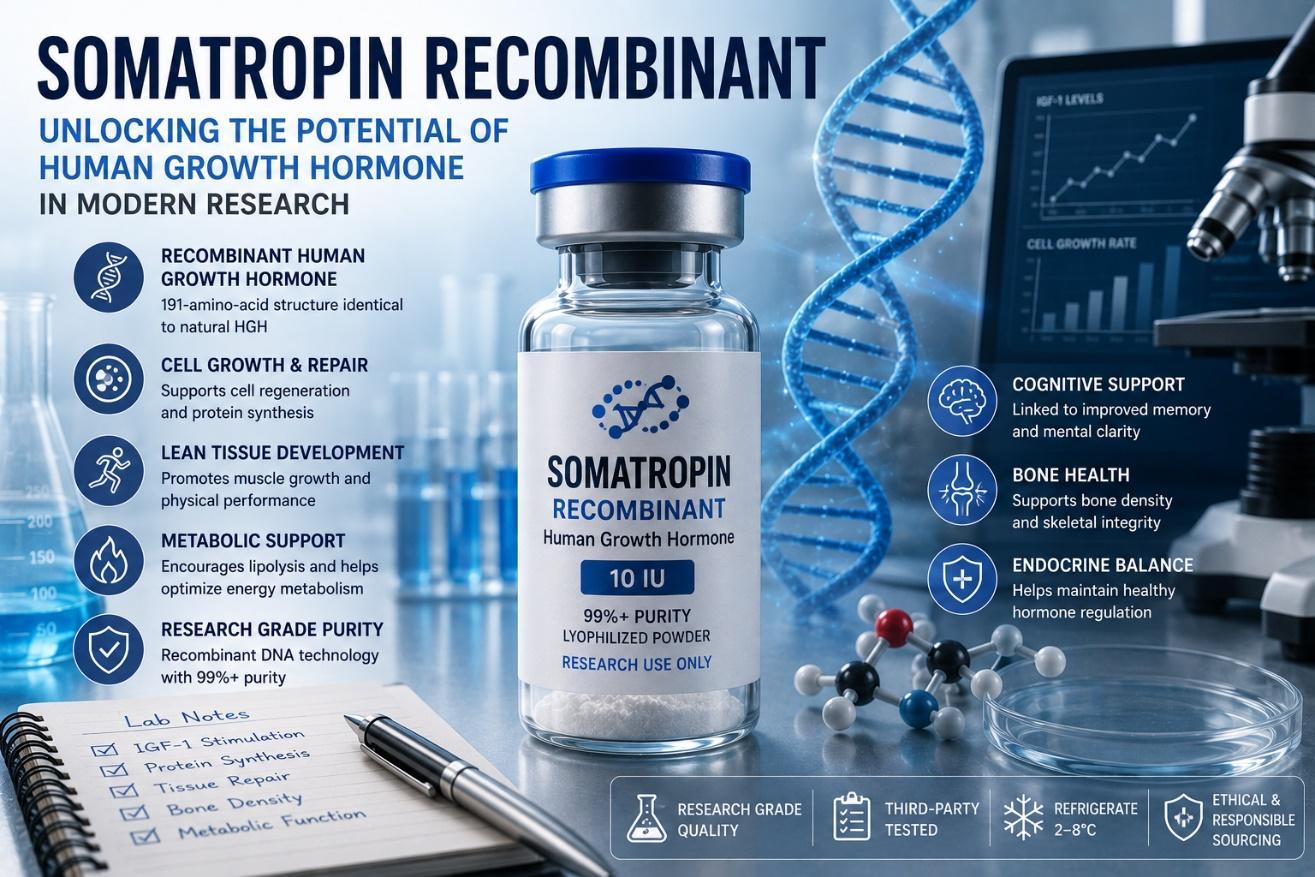
The standing ovation for somatropin recombinant begins with its molecular architecture. Engineered to replicate the body’s native 191-amino-acid growth hormone sequence, it offers researchers structural purity that translates directly into cleaner experiments. When your peptide matches endogenous HGH with that level of precision, background noise drops and signal clarity rises dramatically. Investigators exploring IGF-1 stimulation, protein synthesis, and lipolytic pathways report something rare in peptide science: genuine reproducibility. In a field where inconsistent batches can derail months of careful work, somatropin delivers encores of dependable results. That reliability turns first-time users into long-term collaborators and transforms isolated studies into sustained research programs.
Metabolic Science Finds Its Rhythm
One arena where somatropin truly shines is metabolic science. Research indicates that this growth hormone analog activates lipolysis, helping mobilize adipose tissue for energy production. For labs studying energy balance disorders, age-related metabolic slowdown, or exercise recovery biochemistry, that mechanism opens tangible investigative doors. Beyond fat metabolism, somatropin influences how cells synthesize protein and repair structural damage at the microscopic level. These are not abstract theoretical benefits; they are measurable biological events that researchers can track, quantify, and publish with confidence. When your study demands endpoints you can actually see and verify, somatropin provides the visibility and precision you need to move from hypothesis to conclusion without unnecessary detours.
The Longevity Conversation Gets Louder
Longevity science is booming, and somatropin sits front row in that conversation. Natural HGH secretion declines with age, creating a biological gap that researchers are eager to understand and potentially address. By introducing somatropin recombinant in controlled laboratory settings, scientists can observe how optimized growth hormone signaling affects cell turnover, bone mineral density, and connective tissue integrity over time. The encores here are loud and growing louder. Preliminary findings suggest that somatropin may support the biological machinery behind skin elasticity, skeletal strength, and systemic recovery. This is not anti-aging folklore or marketing fluff; it is rigorous scientific inquiry into how hormone modulation influences the cellular clock and the aging process itself.
Sourcing Excellence Protects Your Data
Even the finest peptide fails if mishandled or improperly sourced. Smart labs treat somatropin sourcing as a critical experimental variable rather than an afterthought. Always prioritize suppliers who publish detailed certificates of analysis, manufacture in GMP-certified environments, and utilize lyophilized preservation protocols from synthesis to delivery. Temperature-controlled logistics and independent third-party validation separate professional-grade materials from hobbyist chemicals. Remember: contaminated somatropin does not just waste budget—it corrupts entire datasets and can invalidate months of careful observation. Protect your hypothesis by protecting your supply chain, and never compromise on purity when the integrity of your research depends on it.
Accessibility Accelerates Discovery
What makes the somatropin story particularly compelling is its accessibility to serious researchers. While some cutting-edge compounds remain trapped in proprietary pipelines or limited distribution networks, somatropin has established itself as a workhorse peptide available through verified channels. That democratization means more labs can participate in growth hormone research, more studies can achieve statistical power, and the scientific community can build knowledge faster through collaboration rather than isolation. In an era where reproducibility crises plague certain corners of science, somatropin offers something refreshingly stable: a compound that does what it says on the label, batch after batch, study after study.
Quick Answers
Why does somatropin recombinant earn research encores?
Its 191-amino-acid structure mirrors natural HGH perfectly, delivering consistent, reproducible data across metabolic and regenerative studies.
How does somatropin support metabolic investigations?
It stimulates lipolysis and IGF-1 pathways, offering labs a reliable model for studying fat metabolism and energy balance.
What makes somatropin valuable for aging research?
Researchers use it to explore how optimized HGH signaling impacts cell turnover, bone density, and tissue repair mechanisms.
What storage keeps somatropin potent?
Lyophilized, refrigerated, and light-protected conditions preserve peptide stability for accurate experimental outcomes.
How do labs verify somatropin quality?
Request certificates of analysis, confirm GMP manufacturing, and ensure independent third-party testing is standard practice.
Final Curtain
Some molecules debut with tremendous hype and vanish quietly into the background. Somatropin recombinant is built differently. It earns encores because it performs under pressure and delivers results that researchers can trust. For investigators committed to growth hormone science, metabolic exploration, or longevity biology, this peptide remains one of the most bankable and reliable stars in the laboratory. When the data keeps demanding repeat experiments and the peer review process keeps validating earlier findings, you know you have found something worth the spotlight. Somatropin is not just another peptide on the shelf—it is a research partner that keeps its promises.
